Wed, May 27th we left the province of Drenthe to start making our way to our last 3 nights of our trip.
AMSTERDAM – here come the Altena’s!!!

I always make sure to pack light so that I can take things home.
We also went shopping and picked up some things that you can’t get here or are way more $ – curry ketchup, tubes of frit sauce, weiners in a can?, hagel slag, stroopwaffel cake mix, droopies (salted licorice)…….My cousin gave us this comical book – the UnDutchables and I look forward to readying it!


Brent was our driver for the week. He enjoyed driving, and got really good at watching the walkers, cyclists, trains, boats, buses, etc. and knowing who has the right of way when. I am just so happy I didn’t have to drive!!! 🙂 The rental van we had was perfect – it fit all 8 of us and all our luggage fit perfectly in the back. GILL Autoverhuur in Leeurwarden.

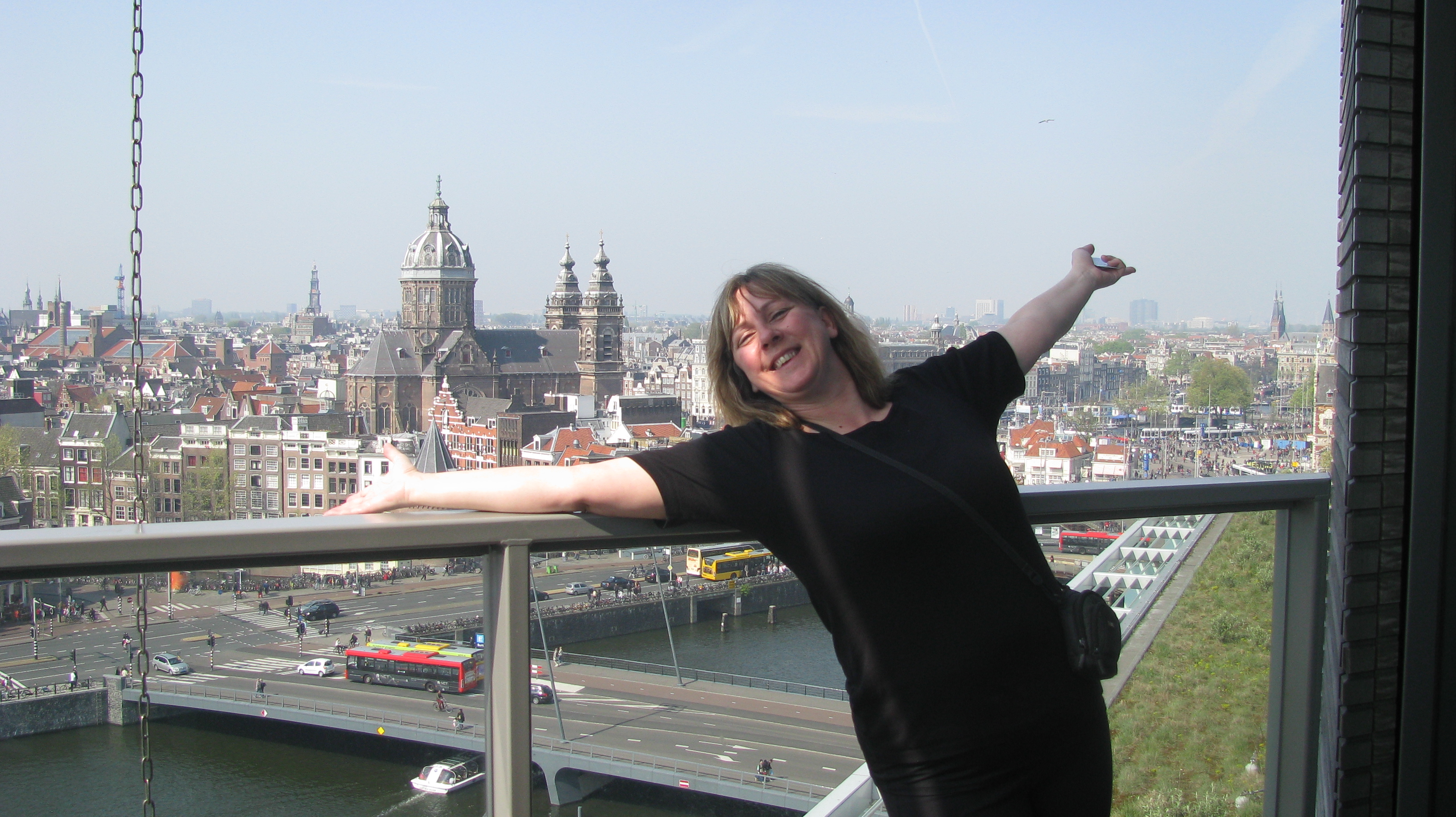
We dropped off our luggage at our B & B and then went out on the town!! – Dam Square first stop!
The gorgeous building you see in the middle of this pic, is the Magna Plaza – their shopping mall, right near Dam Square.

Dam Square is the historic heart of Amsterdam and has been a gathering place for locals and visitors for centuries. Surrounded by landmarks such as the Royal Palace and the National Monument, the square is always bustling with street performers, events, and people from around the world. It remains one of the most iconic and vibrant public spaces in the Netherlands.

The National Monument in Dam Square is the Netherlands’ main memorial to those who lost their lives during the Second World War and later conflicts. Standing in the heart of Amsterdam, it serves as a powerful symbol of remembrance, freedom, and national unity.

The Royal Palace on Dam Square was originally built as Amsterdam’s city hall during the Dutch Golden Age and later became a royal residence. Today, it remains one of the Netherlands’ most important ceremonial buildings and is still used for official royal events

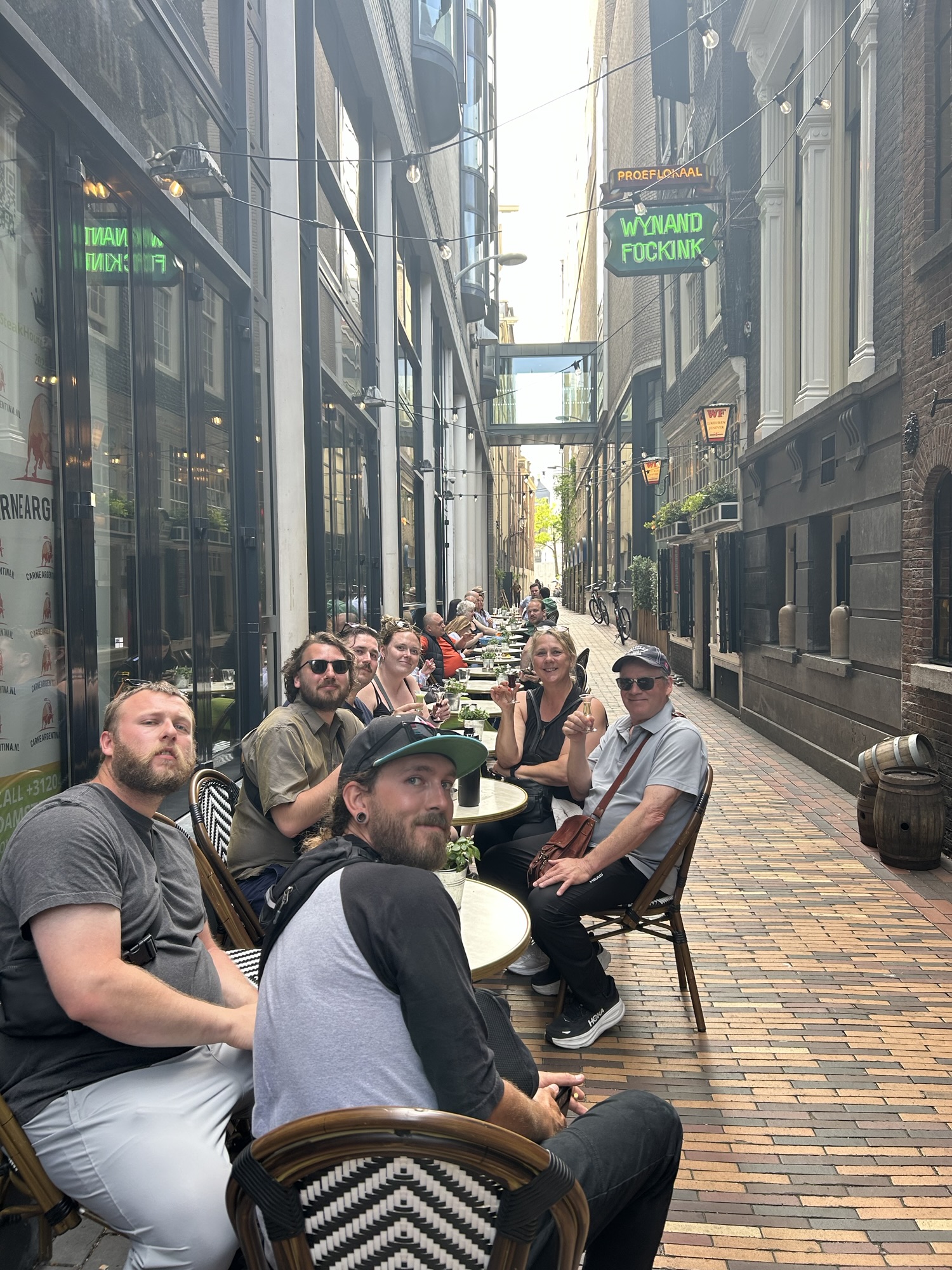
Founded in 1679, Wynand Fockink is one of Amsterdam’s oldest distilleries and a beloved spot for tasting traditional Dutch genever and liqueurs. Stepping into its historic tasting room feels like travelling back in time, with centuries-old traditions still alive today.

They start by asking you – do you like sweet, sour, etc. and then you start trying until you find one you like. If it is a bit too sour, she may mix 2 together. I picked black salted licorice!! (of course I did!) Lekker!

We tried to get all 8 of us at once, but as you can see we couldn’t all fit at the bar. It is super tiny inside, but after you take that first sip (without spilling any on the bar!) they have tables outside in the ally where you can sit and enjoy. The weather is spectacular and so great to be sitting out on patios.


We found a great patio with a view.

In Amsterdam it was easier to split up, so everyone could go and enjoy the things they wanted to see. But it always seemed that very soon…..all 8 of us ended up back together. Cheers!!

Hahaha…..when in Netherlands, at some point you have to sit in a big wooden shoe!! This one is in Dam Square. I guess I should have taken it from the left side so you can’t tell it is only 3/4 of a shoe!


The Oude Kerk (Old Church) is Amsterdam’s oldest building, dating back to the early 1300s. Located in the heart of the city’s oldest neighbourhood, it features stunning wooden vaulted ceilings, historic stained-glass windows, and centuries of Dutch history under one roof. Visitors can also see the grave of the famous Dutch painter Rembrandt van Rijn’s wife, Saskia.
I have been to Amsterdam 6 times now, and have walked around the Oude Kerk every time, but it has never been open to go in. The strangest is that the red light district wraps right around it (on the back side).

Amsterdam Central Station (Amsterdam Centraal) is the city’s main railway hub and one of the busiest transport gateways in the Netherlands. Opened in 1889 and designed by architect Pierre Cuypers, it connects Amsterdam to cities across the country and major international destinations. Its grand neo-Gothic façade facing the city makes it one of Amsterdam’s most recognizable landmarks.


Amsterdam’s canal houses are iconic 17th-century buildings lining the city’s UNESCO-listed canal belt. Built during the Dutch Golden Age, their narrow fronts and tall, elegant facades reflect both wealth and the high cost of taxable street frontage at the time. Many still lean slightly today due to soft ground and historic wooden foundations, giving them their distinctive character.

So much to see in Amsterdam. We walked a lot that first afternoon/evening. We were only there for 2 full days, so you want to pack in as much as you can.


Mata Hari was a Dutch performer who became famous in the early 1900s for her exotic-style dance performances across Europe. During the First World War, she was accused of spying for Germany and France, and was ultimately executed by a French firing squad in 1917. Her life remains controversial—many historians debate how much of her espionage activity was real versus exaggerated, but she is still remembered as one of history’s most famous femme fatales.
We had drinks here waiting for the girls to appear in the windows in the red light district. Of course we had to show the kids this part of Amsterdam as well. Adam did some research on his own and found out about the $2 Euro peepshows, so they all got to check that out too. Crazy!!

Because the city is very old and the canals have been used for centuries, they recover things like bicycles, shopping carts, bottles, and other objects that have been accidentally or deliberately thrown in. We once saw a huge crane with a massive magnet pulling bikes, etc. out of the canals. The canals are regularly dredged (cleaned out) to keep them navigable for boats and to maintain water flow, so the “bottom layer” is constantly being managed and refreshed.


Leave a Reply