Today we are showing the kids where my Mom and Pop are from. We are joined by cousins Willy and Albert, and Beatrix who gave us a great driving tour through the province of Drenthe, Netherlands where our parents grew up, and also Willie and Beatrix’s dad, my Ome Jans, my dad’s brother. I have been here before, 12 years ago but the first time for Bart and the boys.

Bakker Joost is a popular bakery in Borger, Drenthe, known for its freshly baked breads, pastries, and cakes. Located on the town’s main street . It was a very busy spot. The coffee was lekker, as well as the cake I had with the pink icing. It wasn’t Tompouce (as they were sold out) but it looked similar and tasted great. Tompouce (translated is Tom Thumb) is a famous pastry in the Netherlands and is eaten all year long, but eating tompouce is a massive tradition all over Netherlands on King’s Day (Koningsdag) – except that on King’s day the pastry is dyed orange in honor of the Dutch Royal family.
Bakker Joost have a few locations, but this one in Borger is managed now by the granddaughter of my cousin Aly.


Borger is where my Mom and Pop went to school and church. It is about 6 km one way, so that was a lot of cycling every day! They did not have a car so I think bike or walk were the only options they had.

The yellow horned poppy or sea poppy is a summer flowering plant native to Europe, Northern Africa and Asia. Bart took this pic in Borger.

Borger is known as the Hunebed Capital of the Netherlands and is home to the country’s largest hunebed, the one that we walked to. These ancient stone tombs were built about 5,000 years ago by the Funnelbeaker people. The huge boulders used to construct them were carried to Drenthe by glaciers during the Ice Age. We did not go in the museum, but there is one here at Hunebedcentrum which would help visitors discover the fascinating story of these prehistoric monuments.
Yesterday when we travelled to Drenthe, we passed other hudenbedden that we could see from the vehicle.

My Mom, the boy’s Oma lived in this house. It used to be a farm house, house and barn attached, but now it is renovated into one home. This is in a very small country villiage – Essengroen.


The field in the background is where the farm once stood where my father was born and raised – in Westdorp. The farmhouse and farm buildings have been gone for many years, but the land still holds family memories. My Mom and Pop grew up only about three kilometres apart and were married in Borger, where their first two children were born. They lived in this house with my father’s parents and family before deciding to seek a new future.
In 1951, my parents immigrated to Canada. My father wanted to own his own farm, and Canada offered opportunities that were difficult to find in the Netherlands after the war. They first worked on a farm near St. Thomas, Ontario, saving enough money to eventually purchase their own farm in the Niagara region, which is where I was born and raised.


Altena is an old Dutch place name that became a surname for families who came from the historic Land van Altena in North Brabant. The name is found in several locations in the Netherlands and Germany, but its strongest association is with the Dutch river region between the Maas and Merwede. Over the centuries, families bearing the Altena name spread throughout the Netherlands and eventually emigrated around the world, including to Canada.


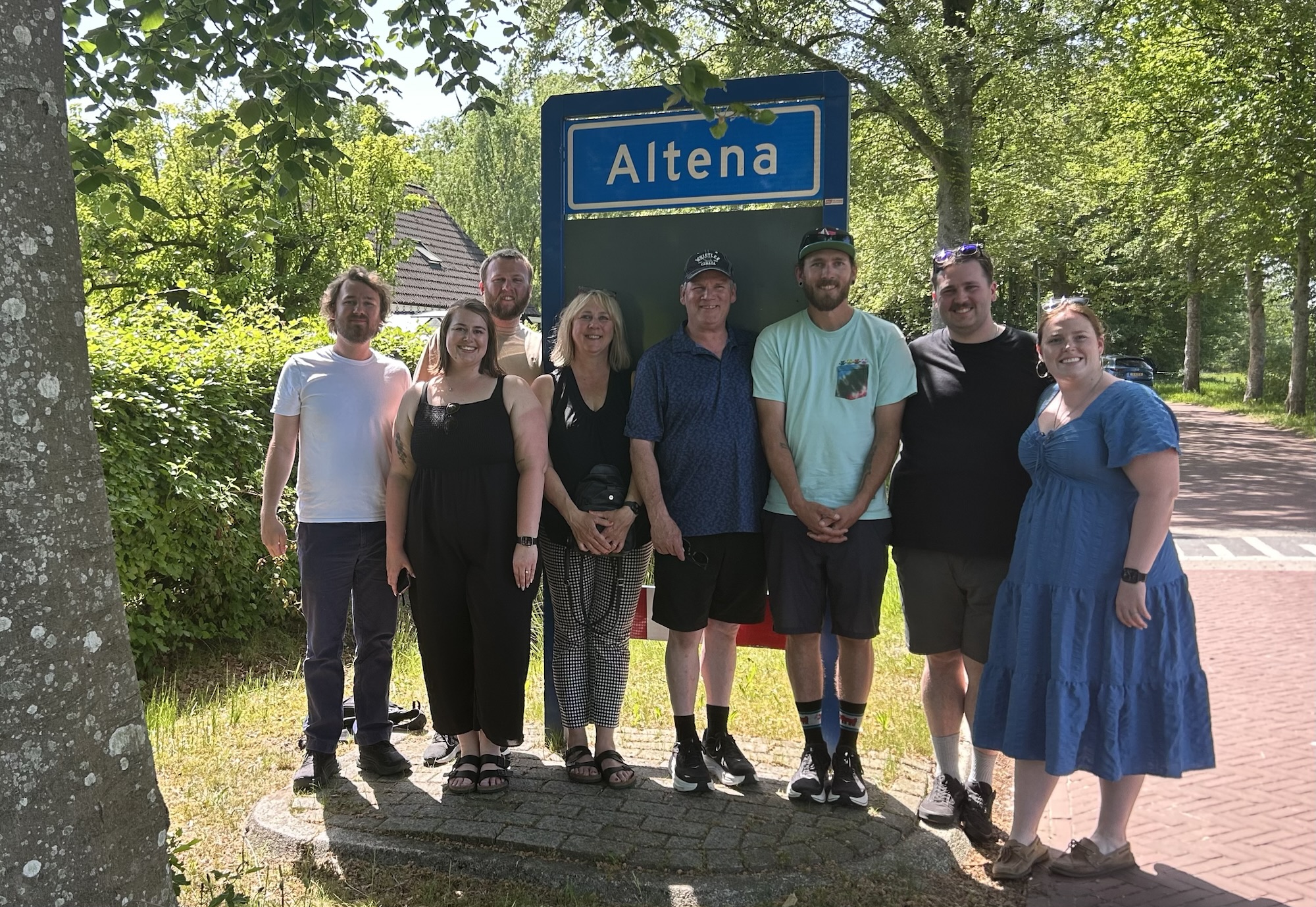
Adam had a great idea – to take a photo of all the non-Altenas standing beneath the “Leaving Altena” sign. It was a fun way to mark our visit to a place that shares our family name. I think it’s neat how towns in the Netherlands have signs showing the town name when you enter, and the same sign crossed out when you leave.

Our family arranged a group visit to De Wachter in Zuidlaren, a historic windmill that produces oil, grinds spices, and mills flour. We were given a personal tour by one of the mill’s volunteers. Built in 1851, the mill eventually fell into disrepair, but the local community came together to restore it and preserve it as a museum. Today, about 60 volunteers help maintain and operate this remarkable attraction.
It was fascinating to see how spices were ground and how oil was produced using traditional methods. The mill also produces flour, with the milling process powered entirely by wind. Having three different production functions in one mill is quite unique and offers visitors a wonderful glimpse into life and industry from long ago. If you visit on a Wednesday or Saturday, you can also enjoy a boat trip on the nearby canal aboard the paddle steamer De Jonge Wachter. It is well worth a visit for anyone interested in history, engineering, or Dutch heritage.


Roanne had lunch ready for us before going to the Mill, and then after the Mill we went back to Willy and Albert’s in Vries for dinner – frits and frikkendellen and bitterballen. Lekker!!
It was so nice that Harry and Wilma also joined us, and Harry brought some lekker Indosian appetizers.

We had a great day exploring Drenthe, where my roots come from. It was wonderful to show our boys where their Oma and Opa were born and raised, and to give them a glimpse into what life was like growing up here. A very special day with our Netherlands family, connecting with our family’s history. ❤️
Leave a Reply