What a great day we had showing the kids where there Beppe (grandma) was from – Molkwerum


Molkwerum used to have a butcher, bakery, school, post office, etc but no longer. It is a touristy village where people will vacation now.


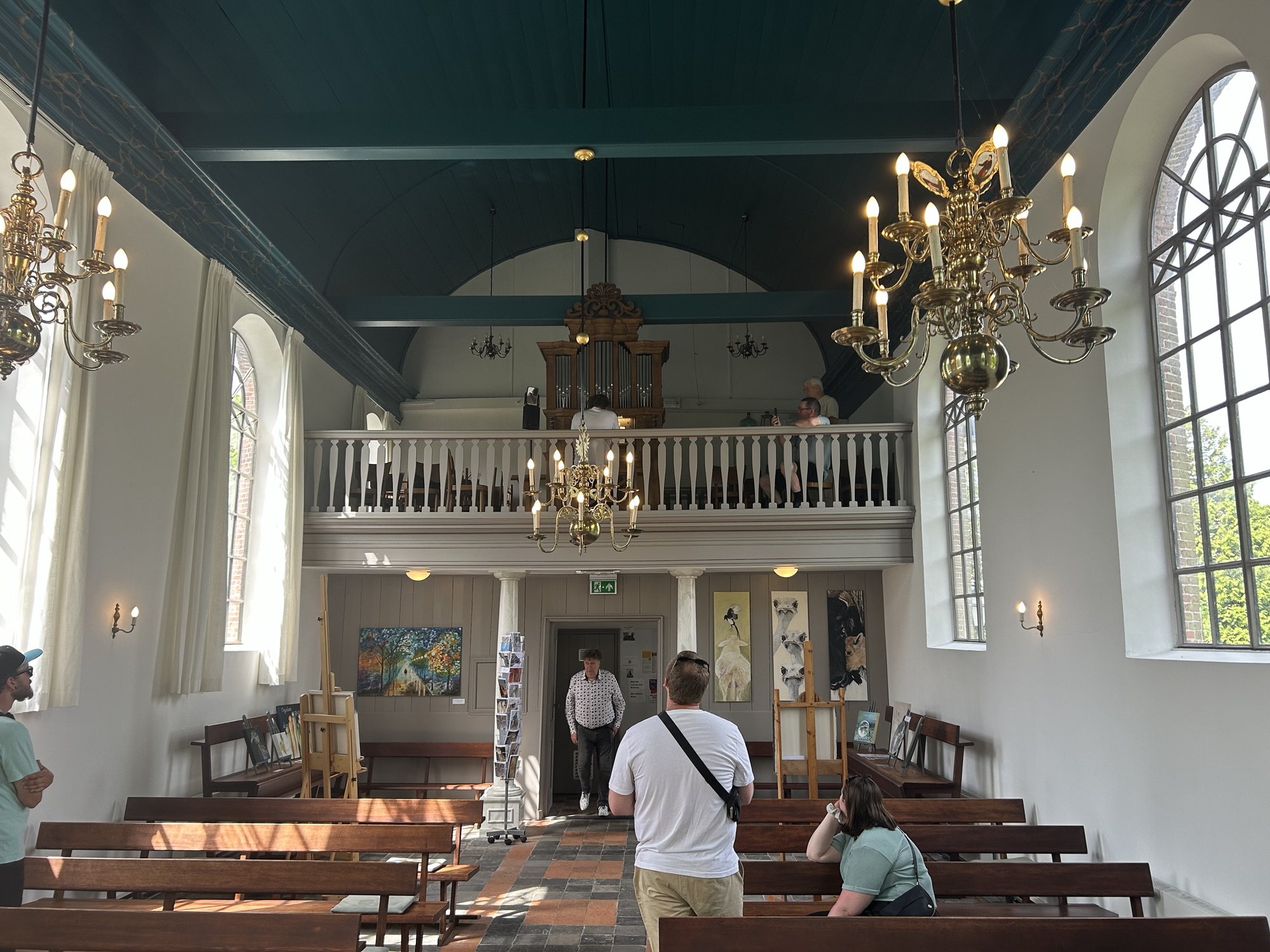
The church was open and we could go in. There was an artist who had her work displayed. They were selling her artwork and cards of her prints and the money was going towards the repair of the organ.
When we came into the church I recognized Klaas. Klaas has lived in Molkwerum his whole life and he owns the bed and breakfast in the village. I met him 4 years ago when I was in Molkwerum visiting Bart’s family.


This is the church where Beppe went. It is from 1591. Herman was playing the organ when we entered. We asked if Cameron could play. Yes. How special that we could go into the church, and then that Cameron could play the organ. There were a few tears shed from the group of us.


Klaas has lived here all his life and knows everything about Molkwerum. We felt very lucky that we bumped into him when we were visiting.

Herman lives beside the museum. He knew where to find the key and he let us into the museum and gave us a tour. The benefits of small village living.


The Afsluitdijk is a 32-kilometre dam that protects the Netherlands from flooding and separates the Wadden Sea from the IJsselmeer. Completed in 1932, it transformed the dangerous Zuiderzee into a calm freshwater lake. Driving across the dike, you can see water stretching out on both sides for miles. The Afsluitdijk remains one of the greatest engineering achievements in Dutch history.
I drove across it once but Bart hadn’t and I thought it would be cool to take them all across. We went about half way, where we could get out and then turn back.


The Kazemattenmuseum is located at Kornwerderzand on the Afsluitdijk, where a series of World War II bunkers played a key defensive role. In May 1940, Dutch forces successfully held off German troops here for several days, which was unusual during the rapid invasion of the Netherlands. The museum preserves these concrete bunkers and shows how soldiers lived and fought in the fortified dike position. Today, visitors can walk through the original defensive structures and learn about this important moment in Dutch wartime history


Hindeloopen is famous for its traditional painted furniture, known as Hindelooper schilderkunst, which developed during the 17th and 18th centuries when the town was a wealthy trading port on the IJsselmeer. Merchants returning from Scandinavia and the Baltic brought back exotic influences, which blended with local styles to create highly decorative interiors. The furniture is typically painted in bright colours like red, green, and blue, with floral patterns, biblical scenes, and stylised landscapes. This craft became a strong symbol of regional identity, and it is still preserved today by local artisans and museums in Hindeloopen.


“slokje” (pronounced slok-yuh), which means a small sip or small drink.

Cheers to Beerenburg, the Frisian drink of Dutch Jenever and herbs. Thanks to cousin Carolein who told us about the drink. Wowza -30% alcohol. I ordered 8 of them and asked him to mix it with coke, which is how Carolein said they would drink it. Many also drink it in chocolate milk.
Cheers to a great day!
Leave a Reply